

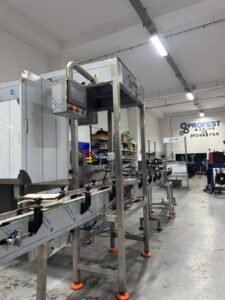

The Rise of Hazelnut Processing in Turkey: A Growing Industry
Turkey has long been recognized as the world’s largest producer of hazelnuts, supplying more than 70% of the global market. With this dominance comes the challenge of efficient post‑harvest processing, especially vital processes like peeling. In an industry where margin and quality define success, mechanization has transformed operations. While traditional methods could handle small batches, the modern market demands rapid, precise, and scalable solutions. That’s where industrial machines like hazelnut peeling machines have revolutionized the sector.
Hazelnut peeling machines have become essential for processors seeking to enhance efficiency, reduce waste, and ensure consistency. Moreover, these machines help maintain the quality standards expected by international buyers. Wherever hazelnut production is significant, from the Black Sea region’s fertile fields to processing plants across Turkey, advanced peeling technology is now at the core of production.
Profest Company for Machinery Manufacturing stands out among industry suppliers, offering state‑of‑the‑art machinery designed to tackle specific challenges in nut processing. Their equipment is crafted to meet the needs of modern processors who prioritize speed, precision, and adaptability.
Why Hazelnut Peeling Matters: Beyond the Shell
Hazelnut peeling isn’t simply about removing the shell; it’s a critical stage that impacts taste, texture, and value. Peeling must protect the kernel from breakage, preserve its shape, and prepare it for subsequent steps like roasting, flavoring, or packaging.
For example, an improperly peeled hazelnut can lose value due to cracked or crushed kernels. The result is not only financial loss but also diminished appeal to premium markets. Likewise, processors dealing with large volumes must maintain a high throughput without sacrificing quality.
On the other hand, manual peeling is labor‑intensive, inconsistent, and slow. This traditional approach cannot match machine precision, especially when consumer expectations for uniform products grow. Thus, investing in reliable peeling machinery is a strategic move for any serious hazelnut processing operation.
How Hazelnut Peeling Machines Work: The Technical Breakdown
Modern hazelnut peeling machines combine mechanical precision with automated processes to optimize performance. At their core, they work through several key stages:
- Feeding and Orientation – The nuts are aligned and fed into the machine in an organized manner.
- Cracking Mechanism – Controlled force cracks the shell without crushing the kernel.
- Separation – The shell fragments are separated from the edible hazelnut.
- Sorting and Cleaning – Debris is removed, ensuring pure kernel output.
Based on that, advanced machines adjust cracking force and sorting sensitivity to accommodate different nut sizes and varieties. Sophisticated sensors and calibrated rollers help reduce kernel damage while maintaining high output rates—often processing hundreds of kilograms per hour.
Profest machines are engineered to adapt to variable input conditions. They incorporate adjustable modules that allow processors to fine‑tune settings based on moisture content, size variation, or desired output type. This flexibility is vital in seasonal operations where nut characteristics vary significantly.
Innovations in Hazelnut Peeling Technology
Technology in the hazelnut peeling sector continues to evolve. Earlier generations of machines lacked adaptability and depended heavily on manual oversight. However, recent advancements brought features such as:
- Automatic Size Detection – Systems that recognize and sort hazelnuts by size to optimize peeling accuracy.
- Intelligent Shell‑Kernel Separation – Sensors that distinguish between shell fragments and kernel pieces to enhance purity.
- Energy‑Efficient Components – Motors and drives designed to reduce electricity consumption without compromising performance.
While automation is reshaping hazelnut factories everywhere, Turkey’s machinery manufacturers are at the forefront, responding to both local and export market requirements. Profest Company for Machinery Manufacturing exemplifies this trend with equipment that integrates robust construction and user‑friendly control systems.
Additionally, advanced machines can tie into digital systems for monitoring and reporting. Operators can access performance metrics, maintenance alerts, and production statistics through a centralized dashboard—boosting visibility and control over the processing line.
Advantages of Investing in Industrial Peeling Machines
Upgrading to an industrial hazelnut peeling machine offers several tangible benefits:
- Increased Efficiency
Machines can process far more nuts per hour than manual laborers, saving time and labor costs.
- Improved Quality Control
Precision cracking minimizes kernel damage, increasing the yield of marketable product.
- Consistency Across Batches
Automated systems deliver uniform results regardless of batch size or operator skill level.
- Lower Long‑Term Costs
Though initial investment may appear substantial, reduced labor expenses and higher output quality drive ROI.
- Scalability
As business grows, machines can be integrated into larger production lines, maintaining performance without bottlenecks.
Likewise, businesses that export to Europe, North America, and Asia find that machine‑processed hazelnuts meet stringent quality criteria more consistently.
Choosing the Right Hazelnut Peeling Machine
Selecting a machine requires careful consideration of several factors:
- Capacity Needs – Estimate daily processing volume to match machine throughput.
- Kernel Quality Standards – Determine the acceptable level of breakage and debris.
- Integration Potential – Assess compatibility with other processing equipment.
- Maintenance Requirements – Check the ease of servicing and available support.
- Budget Constraints – Balance upfront cost with long‑term value.
Profest Company for Machinery Manufacturing offers a range of peeling machines tailored to different scales of operation. Their portfolio includes entry‑level units for smaller facilities and high‑capacity machines for industrial producers. Also, the company provides consultation to help clients identify the right configuration based on specific processing goals.
The Role of Turkish Manufacturers in Global Markets
Turkey’s machinery sector is a vital part of its industrial landscape. Domestic manufacturers understand the practical needs of processors because they work in the same supply chain. This proximity allows them to innovate with precision, incorporating feedback from local producers into their designs.
For international customers, this means access to equipment developed in a major hazelnut‑producing region—built to meet both local conditions and global expectations.
Profest machines are widely recognized for reliability and durability. Their manufacturing processes comply with quality standards that ensure products can compete internationally. In the end, buyers benefit from machinery backed by a company with deep domain expertise and a proven track record.
Visit the official Profest site through this link to explore their full range of machinery: https://profest.com.tr/ar
Installation, Training & After‑Sales Support
A machine’s value extends beyond its hardware. Successful implementation also depends on:
Professional Installation
Machines must be correctly installed and calibrated to perform optimally. Mishandling during setup can reduce efficiency.
Operator Training
Workers should understand machine controls, safety protocols, and troubleshooting methods.
After‑Sales Support
Fast and responsive service ensures minimal downtime if issues arise.
Profest Company for Machinery Manufacturing provides comprehensive support packages with their products. Customers receive hands‑on training, documentation, and access to technical assistance. This holistic approach fosters long‑term partnerships and ensures that processors get maximum performance from their equipment.
Moreover, having local support centers or partner networks simplifies access to spare parts and reduces waiting times for repairs.
Sustainability and Hazard Reduction in Hazelnut Processing
Modern processing facilities are increasingly focused on sustainability. Hazelnut peeling machines now incorporate features that help reduce waste and environmental impact. For example, optimized separation systems ensure shell fragments are collected for recycling or energy generation. Sorting mechanisms minimize loss of edible kernels, reducing waste.
Also, energy‑efficient motors and streamlined operational cycles cut electricity use, lowering the carbon footprint of processing activities.
By adopting advanced machinery, producers also create safer working environments. Automated machines reduce the need for manual cracking, lowering the risk of repetitive stress injuries and exposure to dust or debris.
Economic Impact on Small and Medium Enterprises (SMEs)
Hazelnut peeling machines are no longer exclusive to large industrial plants. Smaller producers and cooperatives can now access scalable solutions that fit their budgets. This democratization of technology empowers SMEs to expand their product offerings and compete in premium markets.
Based on that, many small producers in Turkey leverage modern machines to create value‑added products such as:
- Shelled hazelnuts for confectionery
- Blanched kernels for premium snacks
- Customized nut blends for export
These diversified product lines help small companies capture niche markets and increase profitability.
Future Trends in Hazelnut Processing
Technology in food processing continuously evolves. Coming trends in hazelnut peeling and related machinery include:
- AI‑Enhanced Sorting – Machine learning algorithms to improve separation accuracy.
- Remote Monitoring – Cloud‑based platforms for real‑time machine analytics.
- Energy Regeneration Systems – Units that recapture waste energy to improve sustainability.
Hazelnut processors who adapt to these technologies position themselves for long‑term competitiveness.
Profest Company for Machinery Manufacturing remains at the forefront of innovation, consistently updating their product lines to integrate emerging technologies and respond to customer needs.
Frequently Asked Questions (FAQs)
Q1: What is a hazelnut peeling machine?
A hazelnut peeling machine is industrial equipment designed to crack the hard shell of hazelnuts and separate the edible kernel without damaging it. These machines improve efficiency and yield compared to manual methods.
Q2: How much does a hazelnut peeling machine cost?
Prices vary based on capacity, technology features, and production requirements. Basic models are more affordable, while high‑capacity machines for industrial use come with higher investment costs. Contact manufacturers like Profest Company for specific pricing and options.
Q3: Can hazelnut peeling machines handle different nut sizes?
Yes. Modern machines include adjustable mechanisms and sensors that accommodate variable nut sizes and shapes, ensuring consistent performance.
Q4: Is training provided with the machine purchase?
Reputable manufacturers, including Profest Company for Machinery Manufacturing, provide installation assistance and operator training to ensure proper use and maintenance.
Q5: Do these machines require a lot of maintenance?
Maintenance varies by model. Generally, regular cleaning, lubrication, and inspection of moving parts are sufficient to maintain peak performance. Detailed maintenance guidelines are provided by the manufacturer.